
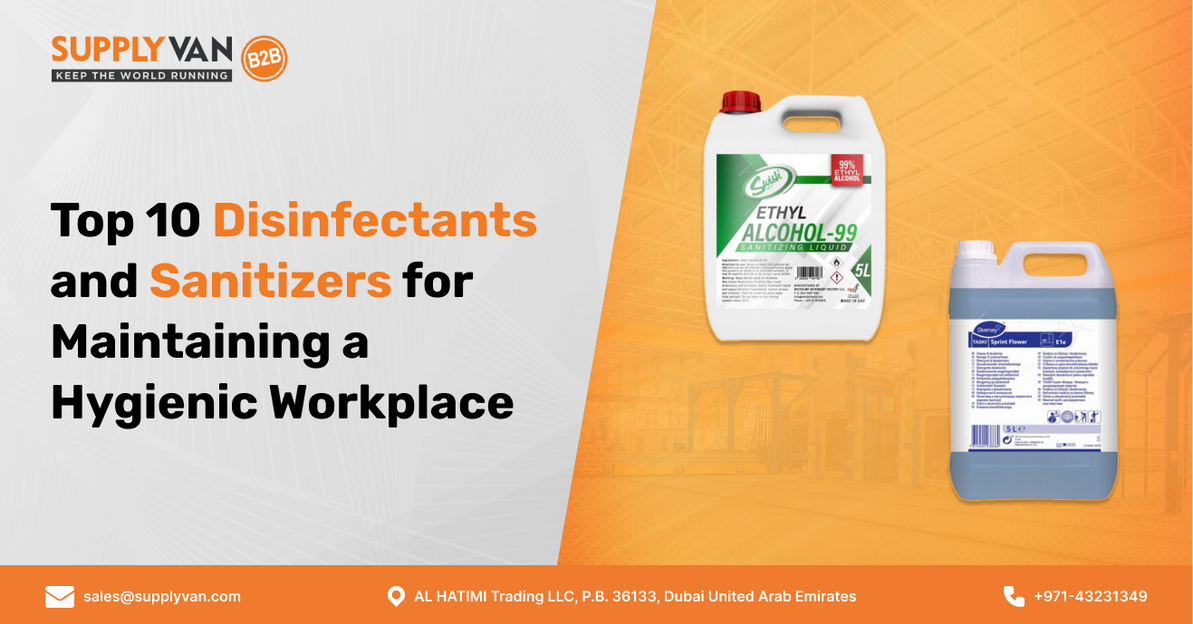
Top 10 Disinfectants and Sanitizers for a Hygienic Workplace
A clean workplace does a lot of quiet work. It keeps people healthy, cuts down on sick days, and makes a space feel good to walk into each morning. Germs, though, do not announce themselves. They sit on door handles, keyboards, shared desks, and break-room counters, waiting for the next hand to come along.
The right disinfectants and sanitizers can stop most of them before they spread.
In a busy office, warehouse, or shop, hygiene is a team effort. One person wiping a desk is a nice start. A steady routine backed by good products is what actually keeps a place safe. Choosing those products can feel confusing when every bottle promises to kill 99.9% of germs.
Here is the catch. Some products kill germs the moment they touch them. Others need a full minute of sitting wet on a surface to do their job. Knowing which is which can be the difference between a desk that is truly clean and one that only looks clean.
Key Takeaways
The best disinfectants and sanitizers for a workplace are alcohol-based hand sanitizers, surface sprays, disinfectant wipes, bleach and hydrogen peroxide cleaners, and trusted antiseptics like Dettol. Each one has a job to do. Sanitizers lower the number of germs on skin and surfaces quickly. Disinfectants kill a wider range of germs but often need more time to work. A smart workplace uses a mix matched to the surface and the level of risk.
|
Product Type |
Best For |
Key Point |
|
Hand sanitizer |
Hands between washes |
Look for around 60% to 70% alcohol or higher |
|
Surface spray |
Desks, counters, tables |
Let it stay wet for the full contact time |
|
Disinfectant wipes |
Fast, high-touch cleanups |
Use a fresh wipe for each area |
|
Chlorine bleach |
Floors, restrooms, hard surfaces |
Dilute it and keep the room ventilated |
|
Hydrogen peroxide |
Many everyday surfaces |
Breaks down into water and oxygen |
|
Dettol and antiseptics |
Flexible, everyday cleaning |
Long-trusted and easy to use |
|
Sanitizer dispensers |
Shared entrances and desks |
Keep them filled and easy to reach |
Supplyvan brings disinfectants, sanitizers, and everyday cleaning supplies together in one easy place, so stocking a hygienic workplace stays simple for teams across the UAE.
Sanitizer vs. Disinfectant: What Is the Difference?
People use these words like they mean the same thing. They do not. Getting the difference right helps you pick the correct product for each job.
Here is the simple version:
- Cleaning removes dirt, dust, and grime. Think of soap and water. It lifts germs off a surface but does not always kill them.
- Sanitizing lowers the number of germs to a safer level. It works fast and is gentle enough for hands and food-contact areas.
- Disinfecting kills a wide range of germs, including many viruses and bacteria. It is stronger and usually needs more time on the surface.
- Antiseptics are made for skin and living tissue, like a cut or scrape. They are safe for people, not just surfaces.
A good routine often uses all three. You clean first to remove grime. Then you sanitize or disinfect to deal with the germs left behind. Cleaning first matters because dirt can shield germs from the product and make it work poorly.
Fun fact: a surface can look spotless and still be covered in germs, since most bacteria and viruses are far too small to see with the eye.
The point is to match the tool to the task. You would not spray a strong floor disinfectant on your hands. You also would not rely on a light hand sanitizer to clean a restroom. Keeping a range of hygiene products on hand lets your team pick the right one every time.
How Disinfectants and Sanitizers Actually Work
Every disinfectant has an active ingredient. That is the part doing the real work. It attacks germs in different ways. Some break down the outer shell of a virus. Others dry out bacteria or damage the parts they need to survive.
One word matters more than any other here: contact time. This is how long the product must stay wet on a surface to kill germs. Wipe it off too soon, and the germs may live. Many surface disinfectants need to sit wet for one to several minutes.
Here is how it plays out in real life:
- You spray or wipe the surface so it is fully wet.
- You let it sit for the time listed on the label.
- You let it air dry, or you wipe it after the time is up.
Skipping step two is the most common hygiene mistake in offices. A quick spray-and-wipe feels clean, but the germs often need more time than that.
Sanitizers work a little differently. They act fast and are meant to reduce germs, not wipe out every last one. That is why an alcohol-based sanitizer feels instant, while a surface disinfectant asks for patience.
The Main Types of Disinfectants
Most workplace disinfectants fall into a few families, each built around a different active ingredient. Knowing them helps you read labels with confidence.
|
Type |
Common Ingredient |
Good To Know |
|
Alcohol-based |
Ethanol or isopropanol |
Fast-acting; works best at higher concentrations |
|
Chlorine-based |
Sodium hypochlorite (bleach) |
Strong and low-cost; needs ventilation |
|
Peroxide-based |
Hydrogen peroxide |
Breaks down into safe by-products |
|
Quaternary ammonium |
Benzalkonium chloride and similar |
Low odor and often gentle on surfaces |
|
Phenol-based |
Phenolic compounds |
Used in some heavy-duty settings |
Alcohols are the quick workers, common in hand sanitizers and surface sprays. Chlorine bleach is powerful and budget-friendly, which is why it shows up in restrooms and on floors. Hydrogen peroxide is popular because it is effective and breaks down gently. Quaternary ammonium compounds, often called QACs or "quats," are known for being stable and easy on many surfaces.
There is no single winner. The best choice depends on the surface, the germs you are worried about, and how much time and airflow you have.
What Are the Most Effective Disinfectants?
The most effective disinfectants are the ones used correctly, on the right surface, for the right amount of time. A weak product used well can outperform a strong product used in a rush.
That said, a few types are widely respected for broad, reliable germ-killing power:
- Alcohol solutions at higher concentrations work quickly against many bacteria and viruses.
- Chlorine bleach, properly diluted, handles a wide range of germs on hard surfaces.
- Hydrogen peroxide offers strong results and breaks down into water and oxygen.
- Quaternary ammonium cleaners are trusted for daily surface disinfecting with less harsh fumes.
Effectiveness always comes back to contact time and coverage. A product only kills what it touches, and only if it stays wet long enough. So the "best" disinfectant is really a habit as much as a bottle.
10 Disinfectants and Sanitizers That Keep a Workplace Germ-Free
Now for the heart of it. These ten disinfectants and sanitizers cover almost every hygiene need in a modern workplace. Together they form a simple, flexible kit for offices, shops, warehouses, and clinics alike.
1. Alcohol-Based Hand Sanitizer
A good hand sanitizer is the front line of workplace hygiene. It kills many germs on the skin in seconds without water or a sink. Look for a formula with around 60% to 70% alcohol or more, since weaker mixes often fall short. Place bottles at entrances, near desks, and by shared equipment. It is the fastest way to protect hands between proper washes, and it takes up almost no space.
2. Multi-Surface Disinfectant Spray
A trusty surface spray handles desks, counters, tables, and door handles. You spray the area until it is wet, wait for the contact time, then let it dry or wipe it clean. These sprays are the everyday workhorse of any hygiene plan. Keeping a bottle in every room means germs never wait long. Supplyvan carries a wide range of surface disinfectants and sanitizers suited to busy work areas.
3. Disinfectant Wipes
Wipes are all about speed. They are perfect for quick cleanups on keyboards, phones, and shared touch points. One wipe, one surface, then toss it. That habit stops you from moving germs from one spot to the next. Wipes shine during the workday, when a full spray-and-wait feels like too much. Stock them at reception, in meeting rooms, and near shared machines.
4. Chlorine Bleach Disinfectant
Bleach is the heavy hitter. A diluted bleach solution deals with tough germs on floors, restroom surfaces, and other hard, non-porous areas. It is strong and low in cost, which makes it a favorite for deep cleaning. Always dilute it as directed and keep the room well ventilated. Never mix it with other cleaners, since some combinations release dangerous fumes.
5. Hydrogen Peroxide Disinfectant
Hydrogen peroxide is a gentler powerhouse. It works on many everyday surfaces and then breaks down into water and oxygen, leaving little behind. That makes it a nice pick for spaces where strong smells are a problem. It is often used on shared surfaces, fixtures, and equipment. Many teams like it because it feels effective without the sharp odor of bleach.
6. Quaternary Ammonium (QAC) Cleaner
Quats are the quiet all-rounders. These cleaners are known for being low in odor and easy on many surfaces, which is why they are common in offices and food areas. They handle daily surface disinfecting without harsh fumes. They tend to be stable and simple to use, so staff can apply them with little fuss. For routine cleaning across a whole building, they are a dependable choice.
7. Dettol Antiseptic Disinfectant Liquid
Some names have earned trust over many years, and Dettol is one of them. This antiseptic disinfectant liquid is flexible, working for surfaces, mopping, and general cleaning when diluted. It has long been a household and workplace favorite across the region. You can find the full Dettol antiseptic range for offices, clinics, and shared spaces. Its familiar scent is often a signal to staff that a space has been cleaned.
8. Floor Cleaner and Disinfectant
Floors take a beating all day. Shoes, spills, and foot traffic bring in germs from everywhere. A dedicated floor cleaner and disinfectant handle both dirt and germs in one pass. Used with a mop and bucket, it keeps large areas fresh and safe. Entryways, corridors, and restroom floors benefit most, since those spots see the heaviest traffic.
9. Antibacterial Hand Wash
Nothing fully replaces a proper hand wash with soap and water. An antibacterial hand wash at every sink gives staff a reliable way to clean their hands well. Soap lifts and rinses away germs, dirt, and oils in one go. Pair it with paper towels for the best result. Placing quality cleaning products and hand wash in restrooms and kitchens keeps good habits within easy reach.
10. Touch-Free Sanitizer Dispensers and Refills
Shared pump bottles can pass germs from hand to hand. Touch-free dispensers solve that by releasing sanitizer with no contact at all. They look tidy, work well at busy entrances, and encourage people to sanitize on the way in. The trick is to keep them filled, since an empty dispenser helps no one. Supplyvan offers hand sanitizer and dispensers along with refills to keep them running.
Setting up a whole floor or building? Supplyvan supplies workplace disinfectants, sanitizers, dispensers, and refills in bulk, with fast delivery so your team never runs dry.
What Are the 10 Cleaning Agents Every Workplace Uses?
Each cleaning agent plays a slightly different role, and together they handle nearly any mess.
- Water loosens dirt and rinses surfaces clean.
- Soap and detergent lift away grease, oils, and grime.
- Alcohol dries out and kills many germs fast.
- Chlorine bleach disinfects hard surfaces and whitens.
- Hydrogen peroxide disinfects and breaks down gently.
- Quaternary ammonium compounds disinfect with low odor.
- Vinegar (a mild acid) cuts through mineral buildup and stains.
- Baking soda (a mild alkali) scrubs and absorbs odors.
- Ammonia cleans glass and shiny surfaces well.
- Enzyme cleaners break down organic stains and smells.
A well-stocked cleaning cabinet usually holds a mix of these. Cleaning agents remove dirt and grease, while disinfectants and sanitizers deal with germs. You often need both to get a surface that is truly clean and safe.
How to Choose the Right Disinfectant for Your Workplace
Picking a disinfectant is not about grabbing the strongest bottle on the shelf. It is about matching the product to the space, the surface, and the people using it. A few simple questions point you to the right choice.
- What surface is it? Hard, non-porous surfaces handle strong cleaners. Screens and electronics need gentle, alcohol-friendly wipes.
- How high is the risk? A clinic or kitchen needs more disinfecting than a quiet back office.
- How much time do you have? Some products need several minutes of contact time. Plan for that.
- Is the area ventilated? Strong products like bleach need airflow to be used safely.
- Who is applying it? Simple, low-fume products are easier for staff to use correctly every day.
Think about how often each surface is touched. High-touch spots, like handles, shared keyboards, and lift buttons, deserve the most attention. Low-touch areas can be cleaned less often. Matching effort to risk saves time and product.
It also helps to keep a short, clear guide near your supplies. When staff know which bottle goes where, the whole routine runs smoother.
Safe Use and Storage Tips
Strong cleaners help you only when they are used with care. A few safety habits keep your team protected and your products working as they should.
- Read the label first. It tells you how to dilute, how long to wait, and where the product is safe to use.
- Never mix products. Bleach and ammonia, for example, can create harmful fumes. Use one product at a time.
- Keep rooms ventilated. Open a window or run a fan when using strong disinfectants.
- Wear protection when needed. Gloves and, at times, eye protection help. For heavier tasks, the right personal protective equipment makes a real difference.
- Store products safely. Keep them upright, sealed, labeled, and away from food and heat.
- Respect contact time. Let products sit wet for as long as the label says.
A quick safety note: store cleaning chemicals away from where food is prepared or eaten, and keep them out of reach of anyone who should not handle them. A locked or labeled cabinet works well.
Good storage also protects the product itself. Heat and sunlight can weaken some formulas over time. A cool, dry cupboard keeps them ready to perform.
Building a Simple Workplace Hygiene Routine
A pile of great products means little without a plan. The good news is that a solid routine is simple to build. It just needs to be steady.
Here is an easy framework many teams follow:
Daily
- Wipe high-touch surfaces like handles, desks, and shared devices.
- Refill hand sanitizer stations and handwashing sinks.
- Empty bins and clean restrooms.
Weekly
- Disinfect floors, meeting rooms, and shared kitchens more deeply.
- Clean equipment that gets less daily attention.
- Restock supplies before they run out.
Monthly
- Do a deeper clean of storage areas, vents, and forgotten corners.
- Check that all dispensers work and are full.
- Review your supply levels and reorder what is low.
Demand for reliable sanitizers in UAE workplaces has stayed high, and Dubai offices in particular tend to keep sanitizing stations at entrances, desks, and shared areas year-round. A consistent routine, paired with visible stations, sends a clear message to staff and visitors that hygiene is taken seriously.
The trick is to make the routine easy to follow. Assign tasks, keep supplies stocked, and post a simple checklist. When hygiene becomes a habit, the whole workplace stays healthier with less effort.
Ready to build your hygiene kit? Browse Supplyvan and get workplace disinfectants, sanitizers, and cleaning essentials delivered fast to your door.
Conclusion
A hygienic workplace is not the result of one deep clean. It comes from smart habits, a steady routine, and the right disinfectants and sanitizers close at hand. Alcohol sanitizers guard your hands. Surface sprays and wipes handle daily touch points. Bleach, hydrogen peroxide, and trusted antiseptics take care of the deeper work. Dispensers and hand wash tie it all together.
Match each product to its job, respect contact time, and keep your supplies stocked. Do that, and a clean, healthy workplace becomes the norm rather than a scramble. Your team feels the difference, and so does everyone who walks through the door.
Keep your workspace clean, safe, and ready for anything with quality supplies from Supplyvan, your one-stop shop for workplace hygiene across the UAE.
Frequently Asked Questions
What are 5 examples of disinfectants?
Five common examples are alcohol (ethanol or isopropanol), chlorine bleach (sodium hypochlorite), hydrogen peroxide, quaternary ammonium compounds, and phenolic disinfectants. Each works well on different surfaces and germs.
Are hand sanitizers as good as washing hands?
Washing with soap and water is the gold standard, especially when hands look dirty or greasy. Hand sanitizer is a strong backup when a sink is not nearby, as long as it has enough alcohol to work.
How long should a disinfectant stay on a surface?
It depends on the product, but many surface disinfectants need to stay wet for one to several minutes. Always check the label, since wiping too soon can leave germs behind.
Can I mix two disinfectants for better results?
No, mixing products is risky and can create harmful fumes, such as when bleach meets ammonia. Use one product at a time and follow its label for the safest, most effective clean.
How often should a workplace be disinfected?
High-touch surfaces like handles and shared desks should be disinfected daily, or more often in busy or high-risk spaces. Floors, kitchens, and less-touched areas can be handled on a weekly deep-clean schedule.
Recent Posts
-
Top 10 Disinfectants and Sanitizers for a Hygienic Workplace
A clean workplace does a lot of quiet work. It keeps people healthy, cuts down on sick days, and mak …10th Jul 2026 -
How to Choose the Right Masking Tape for Painting, Packaging & Industrial Use
Standing in front of a shelf full of tape rolls can feel confusing. They all look pretty similar. Th …3rd Jul 2026 -
Packaging Materials in UAE: From Strapping Rolls to Heat Sealers
A pallet that arrives wrapped tight and sealed clean tells you something before you even open it. It …26th Jun 2026