
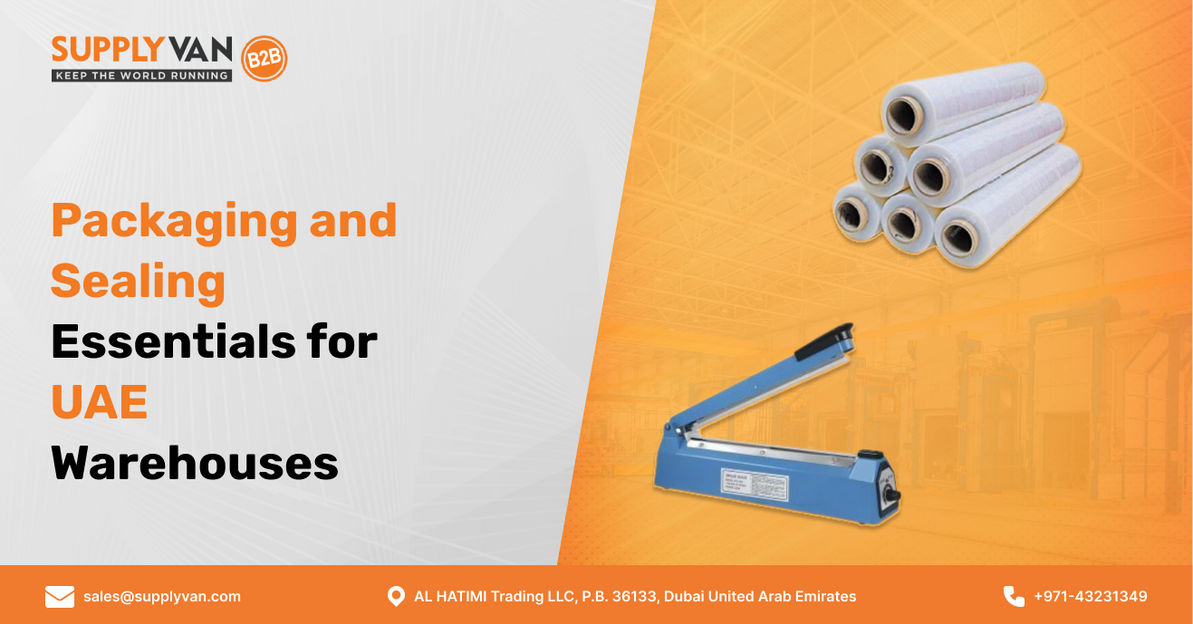
Packaging Materials in UAE: From Strapping Rolls to Heat Sealers
A pallet that arrives wrapped tight and sealed clean tells you something before you even open it. It says someone cared about how the goods would travel. In a region built on trade, ports, and fast-moving freight, that kind of care is part of doing business.
Good packaging materials in UAE warehouses do quite important work every single day. They hold loads together, keep dust out, and help products reach the next stop in the same shape they left in.
The trouble is that packaging gets treated like an afterthought. A box is a box, right? Not quite. The wrong strapping snaps under load. A weak seal lets humidity creep in. A slow machine creates a line of workers waiting around.
Picking the right packaging and sealing supplies is a small decision that touches almost everything else in a warehouse.
Heat, sand, long transit times, and re-export demand a lot from a humble roll of film. The materials that hold up here are not always the ones you would grab by default.
Key Takeaways
The most important packaging materials for a UAE warehouse are strapping rolls, stretch wrap, shrink film, packing tape, sturdy boxes, protective void fill, and sealing machines like heat sealers. Together they secure loads, protect goods from heat and dust, and keep products safe through shipping and storage. Choosing the right mix depends on what you ship, how much you move, and how rough the journey is.
|
Material |
Main Job |
Best For |
|
Strapping rolls |
Bundle and secure loads |
Heavy boxes, pallets, bundled items |
|
Stretch wrap |
Hold pallet loads steady |
Palletizing, dusty storage |
|
Shrink film |
Tight, sealed cover with heat |
Retail packs, tamper protection |
|
Packing tape |
Close and seal cartons |
Box sealing, bundling |
|
Boxes and cartons |
Hold and protect goods |
General shipping and storage |
|
Void fill |
Cushion empty space |
Fragile or loose items |
|
Sealing machines |
Seal bags and pouches |
Poly bags, repackaging, food items |
Supplyvan brings strapping, stretch film, tapes, boxes, and sealing machines together in one place, so businesses across the UAE can stock a warehouse without chasing a dozen different suppliers.
Why Packaging Works Harder in the UAE
Packaging anywhere has the same basic goal. It protects what is inside. The UAE just adds a few extra challenges that make material choice matter even more.
Start with the heat. Warehouses and trucks can get very warm, and some packaging reacts to that. Cheap film can stretch, soften, or lose its grip. Adhesives on low-grade tape can dry out or slide. A seal that looked fine in the morning can fail by the afternoon if the material was not built for warm conditions.
Then there is dust and fine sand. It gets into everything. A loosely wrapped pallet collects grit that scratches surfaces and works its way into open packaging. Stretch wrap and sealed bags act like a shield against all of that.
Humidity near the coast is another factor. Moisture can soften cardboard, spot metal parts, and ruin paper labels. A tight seal keeps damp air away from sensitive goods.
If your goods sit in a yard or non-climate-controlled bay before shipping, treat sun and heat as part of the journey. Choose film and tape rated for warm conditions, not just the cheapest roll on the shelf.
Finally, the UAE is a re-export hub. Many goods land here, get stored, and then ship out again. That means packaging often has to survive two or three trips instead of one. Materials that can take repeat handling pay for themselves fast.
The UAE has long been known as one of the busiest trade crossroads between Asia, Europe, and Africa, which is part of why packaging here often has to last through more than one journey.
Essential Packaging Materials for UAE Warehouses
This is the heart of it. A well-stocked warehouse keeps a short list of reliable materials on hand and knows when to use each one. Here are the core items worth keeping in stock and what each one does best.
1. Strapping Rolls
Strapping is the flat band you see wrapped around boxes, bundles, and pallets. It pulls items together into one solid unit so nothing shifts during transport. It comes in a few materials, and the right one depends on your load's weight and edges. Strapping rolls are a staple for anyone moving heavier or bundled goods.
2. Stretch Wrap
Stretch wrap, also called pallet wrap, is the clingy plastic film you wind around a loaded pallet. It stretches as you apply it and then hugs the load tight. It keeps boxes from sliding, blocks dust, and makes a stack easier to move as a single unit. It is one of the most used items in any warehouse for good reason.
3. Shrink Film
Shrink film looks similar to stretch wrap but works oppositely. Instead of stretching, it shrinks when you apply heat. You wrap the item, then pass a heat source over it, and the film tightens into a smooth, sealed skin. It gives a clean retail look and a clear sign if a package has been opened.
4. Sealing Machines and Heat Sealers
When you pack things in plastic bags or pouches, you need a way to close them properly. A sealing machine uses heat to fuse the plastic shut, creating a clean, strong closure that tape cannot match. These range from small handheld units to bench models that run all day. More on the types of these below.
5. Packing Tape
Tape closes cartons and bundles small items. The most common is carton sealing tape, often a clear or brown plastic film tape that holds box flaps shut. There is also paper tape, masking tape for light jobs, and reinforced tape for heavy cartons. Good tape sticks on the first pass and stays stuck.
6. Boxes and Cartons
Corrugated boxes do the basic work of holding goods. They come in single, double, and triple wall versions for different weights. Stronger walls handle heavier or stacked loads. Keeping a few common sizes in stock saves time and cuts down on wasted space inside each box.
7. Protective Void Fill
Empty space inside a box is where damage happens. Items slide, knock together, and break. Void fill takes up that space. This group includes bubble wrap, foam sheets, air pillows, paper fill, and corner protectors. Fragile goods especially need this cushioning layer.
8. Strapping Tools and Accessories
Strapping rolls need a few partners to do their job. Tensioners pull the strap tight, sealers or buckles lock it in place, and dispensers keep the roll feeding smoothly. Without these tools, even the best strapping is hard to apply well.
9. Labels and Marking Supplies
Last but useful, labels and markers keep goods identified and sorted. Shipping labels, barcode labels, and handling marks like "fragile" or "this way up" help products move through the chain without confusion. Clear film over a label also protects it from rubbing off.
You can find a full range of warehouse packaging materials under one roof, which makes restocking far simpler than sourcing each item from a separate place.
Strapping Rolls Explained: PP, PET, and Steel
Strapping seems simple until you stand in front of three different rolls and have to pick one. The material makes a real difference, so here is a plain breakdown.
Polypropylene (PP) strapping is the lightweight, everyday choice. It is flexible, easy to apply by hand or machine, and works well for light to medium loads like cartons, bundles, and print stacks. It resists moisture, which is handy in humid conditions. It is also the most budget-friendly option.
Polyester (PET) strapping is the stronger plastic option. It holds tension over time, even if a load settles or shifts. That makes it a good fit for heavier pallets and goods that travel long distances. Many businesses use it as a safer, cleaner alternative to steel.
Steel strapping is the heavy hitter. It handles very heavy, sharp, or rigid loads like metal coils, bricks, and large machinery. It is strong but harder to handle, and it can rust, so it is less suited to damp or coastal storage unless coated.
Here is a quick side-by-side.
|
Strapping Type |
Strength |
Best Use |
Notes |
|
Polypropylene (PP) |
Light to medium |
Cartons, bundles, light pallets |
Cheap, flexible, moisture-resistant |
|
Polyester (PET) |
Medium to high |
Heavy pallets, long transit |
Holds tension well, good steel alternative |
|
Steel |
Very high |
Metal, brick, machinery |
Strongest, can rust, harder to handle |
Matching the strap to the load matters more than buying the strongest option. Over-strong steel on a light carton can crush it, while weak PP on a heavy pallet can snap. The right fit protects both the goods and your budget.
PP strapping ends are usually joined by heat, where a tool briefly melts the overlap to weld the band into a secure loop, no buckle needed.
Sealing Machines and Heat Sealers: Picking the Right One
If you pack anything in plastic bags or pouches, a sealer earns its keep fast. A heat sealer machine melts the edges of the plastic together to form a tight, lasting seal. The result resists moisture, keeps contents fresh, and shows clearly if a bag has been tampered with. Tape just cannot do that.
There are a few common types, and the right one depends on your volume and material.
- Impulse sealers. These heat up only when you press the bar down, then cool right after. They use less power, need no warm-up, and handle common bags like polyethylene and polypropylene. They are a great starting point for low to medium volume.
- Constant heat sealers. These keep the bar hot all the time. The steady heat seals thicker or coated materials that impulse sealers struggle with, like foil-lined or laminate bags. Good for heavier-duty jobs.
- Continuous band sealers. These run bags along a conveyor and seal one after another without stopping. They suit busy operations that seal large numbers of bags each day.
- L-bar sealers and shrink systems. These seal and trim shrink film around a product, often paired with a heat source to shrink the film tightly. Common in retail packing.
Choosing between them comes down to a few questions. What material are your bags made of? How many do you seal in a day? Do you need the unit to sit on a bench or move to the product? Answer those, and the choice gets easy.
For poly bag work in particular, a dependable heat poly bag sealer keeps closures consistent and fast, which matters when you are sealing the same bag hundreds of times.
Need a sealer that keeps up with daily volume? Supplyvan stocks heat sealers and poly bag sealing machines built for steady, repeat warehouse use.
Keep spare sealing wire and Teflon tape on hand for impulse sealers. These wear out with use, and a small spare kit saves you from downtime in the middle of a busy shift.
Stretch Wrap vs Shrink Wrap: What Is the Difference
People mix these two up all the time, and it is easy to see why. Both are clear plastic films that wrap around goods. The difference is in how they grip.
Stretch wrap uses tension. You pull it as you wind it around a pallet, and its stretchy nature clamps the load tight. No heat needed. It is the go-to for holding boxes together on a pallet for storage and transport.
Shrink wrap uses heat. You loosely cover the item, then apply heat, and the film shrinks down into a snug, sealed layer. It gives a tidy, retail-ready finish and a tamper-evident seal.
Here is the simple version.
|
Feature |
Stretch Wrap |
Shrink Wrap |
|
How it works |
Stretches and clings |
Shrinks with heat |
|
Heat needed |
No |
Yes |
|
Best for |
Pallets, bulk storage |
Retail packs, single items |
|
Finish |
Functional, loose look |
Tight, glossy, sealed |
|
Equipment |
Dispenser or wrap machine |
Heat gun, sealer, or tunnel |
For most warehouse pallet work, stretch wrap is the workhorse. Shrink wrap steps in when you want a clean seal on individual products or multipacks. Many warehouses keep both, since they solve different problems.
How to Choose the Right Packaging Materials for Your Operation
There is no single "best" setup. The right mix depends on your goods, your volume, and your conditions. Walk through these factors, and the picture gets clear.
- Weight and shape of the load. Heavier and sharper loads need stronger strapping and tougher film. Light cartons do fine with PP strapping and standard stretch wrap.
- How much do you ship? Low volume can run on hand tools and impulse sealers. High volume calls for machine film, automatic wrappers, and continuous sealers to keep the line moving.
- Storage conditions. Hot, dusty, or humid storage points you toward heat-rated film, moisture-resistant strapping, and tight seals.
- Travel distance. Long trips and re-export need packaging that survives repeat handling. PET strapping and quality wrap hold up better here.
- Fragility. Delicate goods need void fill and cushioning. Sturdy items can skip it.
- Presentation. Retail-bound goods benefit from clean shrink wrap and clear sealed bags. Bulk freight cares more about strength than looks.
There is also the human side. Strapping, sealing, and lifting all day is physical work, and the people doing it deserve to be safe. Pairing the job with the right protective equipment like cut-resistant gloves cuts down on small injuries from sharp strapping edges and box cutters.
Buying purely on price often costs more later. A cheap roll that fails mid-shipment can mean damaged goods, returns, and lost trust. Reliable materials are the cheaper option once you count the whole journey.
Ready to set up your packing station the right way? Browse Supplyvan's full packaging and sealing range and get B2B pricing on bulk orders that keep your shelves stocked.
Common Packaging Mistakes UAE Warehouses Make
Even experienced teams slip into a few habits that cost money and cause damage. Here are the ones worth watching for.
- Using one material for everything. A single tape or strap rarely fits every job. Matching the material to the load saves goods and money.
- Skipping void fill. Empty space inside a box is the most common cause of damage. A little cushioning prevents a lot of breakage.
- Wrapping too loose or too tight. Loose stretch wrap lets loads shift. Over-tight strapping crushes boxes. Both create problems.
- Ignoring the climate. Standard film and adhesives can fail in heat. Conditions here often call for materials rated for warm storage.
- Letting machines wear out. A worn sealing wire or dull blade makes weak seals. Simple upkeep keeps quality steady.
- Stocking out at the wrong time. Running out of tape or strapping mid-shift stalls everything. A steady supplier and a small buffer stock prevent that.
Fixing even two or three of these tends to show up quickly in fewer damaged shipments and smoother packing days.
Buying Packaging Materials in the UAE: What to Look For
Once you know what you need, the next step is sourcing it well. A few things separate a good supply setup from a frustrating one.
Look for range first. A supplier that carries strapping, film, tape, boxes, sealers, and accessories together saves you from juggling many orders. One delivery, one invoice, less hassle.
Check for bulk and B2B pricing. Warehouses use these materials by the case, so per-unit cost adds up fast. Business pricing on volume makes a real difference over a year.
Mind stock reliability. A supplier who keeps common items in stock means you are not waiting days for a roll of tape. For a warehouse, that consistency is worth a lot.
Finally, think about quality and fit. The cheapest option is rarely the best value once you factor in failed seals and damaged goods. Materials that perform in local conditions keep your whole operation running clean.
Conclusion
Packaging is easy to overlook until something arrives crushed, scratched, or soaked. The right packaging materials in UAE warehouses quietly prevent all of that. Strapping holds loads together, stretch and shrink film shield against dust and heat, tape and boxes do the everyday work, and sealing machines lock bags shut with a clean, lasting seal.
Match each material to the job, account for the heat and the travel, and your goods reach their destination the way they should.
The best part is that none of this has to be complicated. A short list of reliable materials, a couple of good machines, and a steady supplier cover most of what a warehouse needs.
Whatever you are shipping, Supplyvan can help you pack it tight, seal it clean, and send it out with confidence.
FAQs
What is the most common strapping used in UAE warehouses?
Polypropylene strapping is the most widely used because it is lightweight, flexible, and affordable, making it ideal for light to medium loads like cartons and bundles. Polyester strapping is the common step up for heavier pallets.
Do I need a sealing machine if I already use tape?
For closing boxes, tape is fine, but for plastic bags and pouches a heat sealer gives a much stronger, moisture-resistant seal that tape cannot match. If you pack goods in poly bags, a sealing machine is worth having.
Can stretch wrap handle the heat in the UAE?
Standard stretch wrap can soften in very warm conditions, so it helps to choose film rated for heat or higher performance grades. Applying it correctly and storing pallets out of direct sun also makes a difference.
What is the difference between an impulse sealer and a constant heat sealer?
An impulse sealer heats only when you press it down and suits common poly bags, while a constant heat sealer stays hot and handles thicker or coated materials like foil-lined bags. Your bag material decides which one fits.
How do I stop boxes from getting damaged during shipping?
Use the right box strength for the weight, fill empty space with void fill like bubble wrap or air pillows, and strap or wrap the load so nothing shifts. Most damage comes from movement and empty space inside the package.
Recent Posts
-
How to Choose Office Supplies and Equipment Smartly for UAE Workplaces
Setting up an office feels easy until you are standing in front of a blank purchase list. Pens, pape …31st Jul 2026 -
Safety Equipment Checklist for UAE Construction Sites
A construction site in the UAE is one of the busiest places you can stand. Cranes swing overhead, co …24th Jul 2026 -
Material Handling Equipment and Storage Solutions Every UAE Warehouse Have
A warehouse is only as good as the tools inside it. Goods come in, get sorted, get stored, and go ou …17th Jul 2026